
SUBTERRANEAN FAUNA
Subterranean fauna are organisms that live exclusively in air-filled (troglobites or troglofauna) or water-filled (stygobites or stygofauna) subterranean void systems. These systems can be very extensive but most are highly localised. Most Western Australian subterranean fauna are Short-range endemics (SREs). In Western Australia, Subterranean Fauna are protected through the Western Australian EPA and surveys of subterranean fauna are also regulated.
Subterranean habitats are characterised by perpetual darkness, very low energy and nutrient availability, and extreme stability of environmental conditions. Organisms living in these environments are highly specialised to living in such habitats and are characterised by distinctive adaptations including:
reduction or loss of eyes, body pigmentation and wings,
elongated bodies and or appendages,
thin exoskeleton
very slow metabolism.
These specialisations also restrict these species to these environments.
TROGLOFAUNA
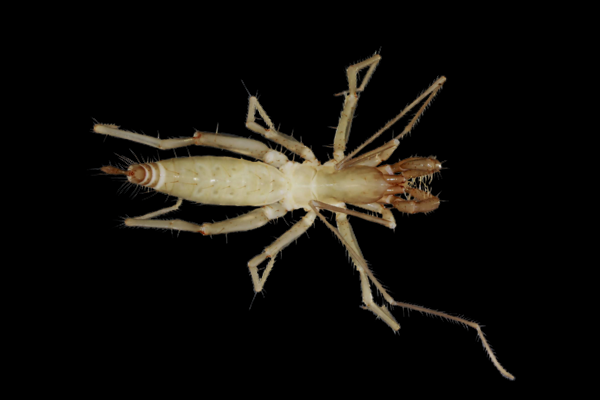
Subterranean schizomid (Draculoides sp.) from the Pilbara, Western Australia.
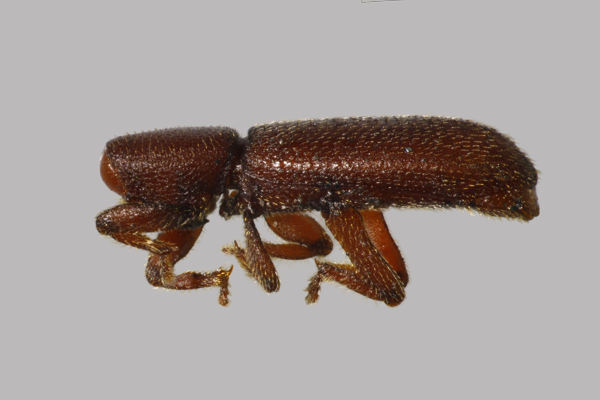
Subterranean weevle (Curculionidae) from the Pilbara region of Western Australia.
Troglofauna (Troglobites) are organisms living in air-filled subterranean void systems. These void systems are categorised by
their size:
macrocaverns, 20 cm or larger
mesocaverns, 0.1 cm - 20 cm
microcaverns, 0.1 cm (1mm) or less in diameter
These systems can form through several processes including
porous rock formation, such as porous basalt
rock solution, such as limestone caves
sedimentry deposits, such as course gravels or unconsolidated pssolite.
These systems can be very extensive but most are highly localised.
Most Western Australian troglofauna are Short-range endemics.
Stygofauna
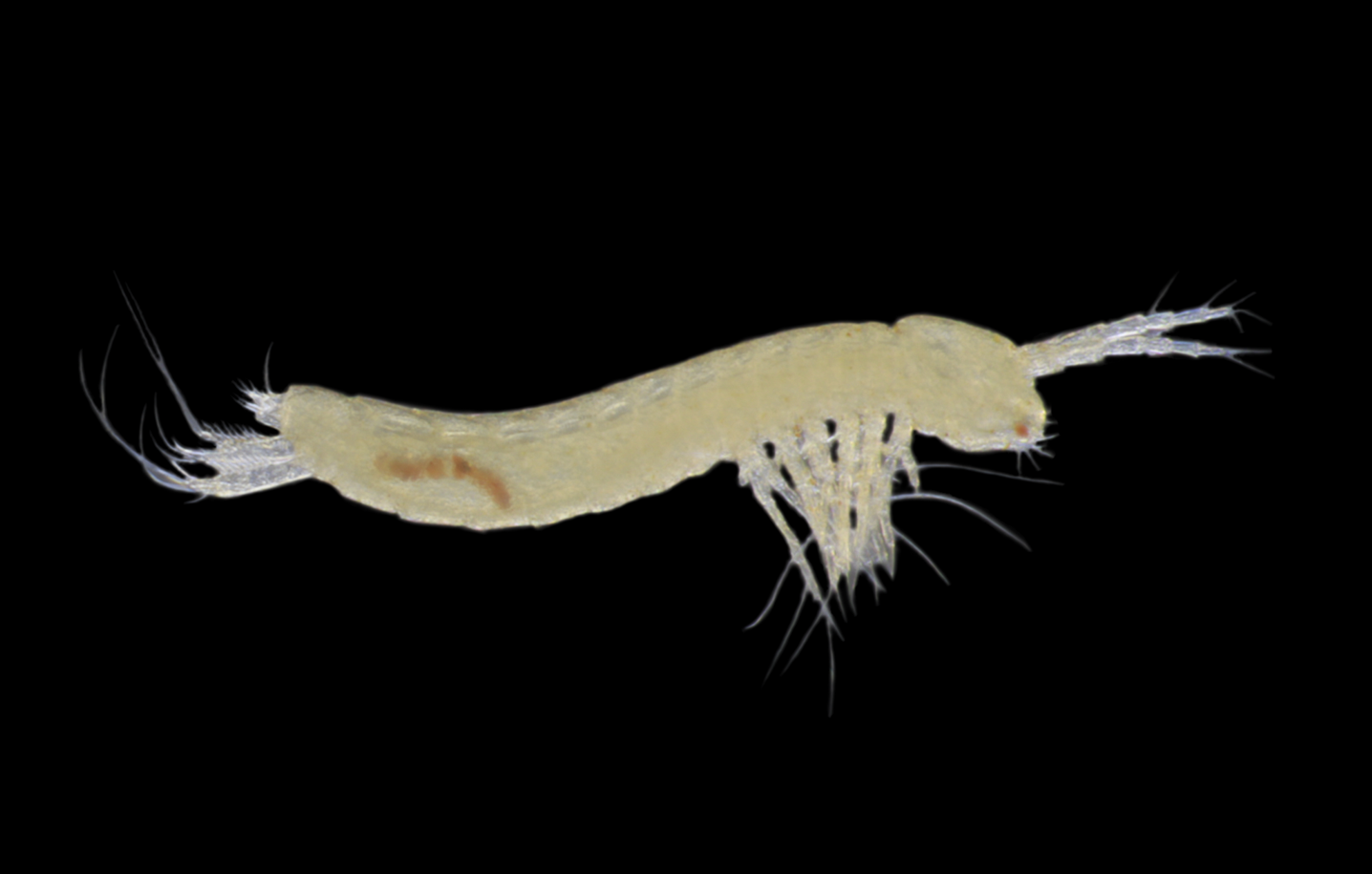
A stygal species of Atopobathynella (Syncarida) from the Pilbara region of Western Australia.
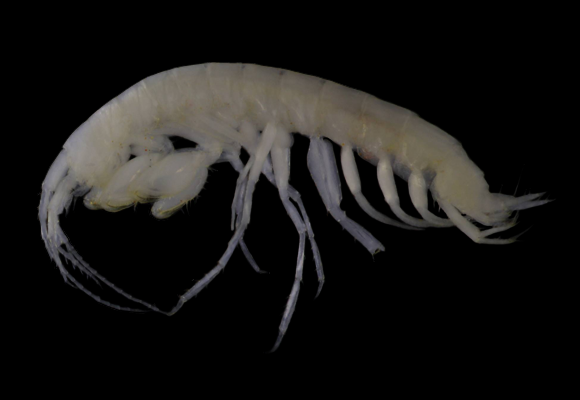
A stygal species of Maarka (Amphipoda), from the Pilbara region of Western Australia
Stygofauna (Stygobites) are organisms living in water-filled subterranean void systems, also called aquifers. These systems can be defined by porous rock formations (limesone, calcrete or pissolite), or by porous unconsolidated substrate. The water filled porous sands and gravels surrounding rivers, creeks and lakes is referred to as the hyporheic zone, which also supports stygofauna.
The distributions of stygofauna may be localised or more widespread and tends to be limited by the extent of the aquifers they inhabit, or by significant hydrogeological divides.